GAMP Services Limited
  • Our Company
    • About Us
    • Contact Us
  • Services
    • Thermal Validation
    • Commissioning, Qualification & Validation
    • Clean Room Validation
    • Computer System Validation & Data Integrity
    • Bio-Decontamination
  • Manufacturing
    • Data Logger
  • Industries
    • Life Science
    • Pharmaceutical
    • Medical Devices
    • Food & Beverages
    • OEM, Testing & Third-party Validators
    • High-Tech
    • Semiconductor
    • Electrical, Electronics & Mobile
    • Aerospace & Defence
    • Automobile, EV, Battery & Renewables
  • Distribution
    • Thermal Validation
    • Cleanroom Monitoring
    • Biodecontamination
    • Tracer Particle Generator
    • Process Analytical Tools (PAT)
  • Resources
    • News
    • Knowledge Centre
  • Investor Relations
    • Governance
    • Board of Directors
    • Key Managerial Personnel (KMP)
    • Composition of Committees
    • Policies
    • Our Group
    • Our Subsidiaries
    • Group Companies
    • Disclosures
    • Annual Report
    • Annual Return
    • Memorandum of Association (MOA)
    • Articles of Association (AOA)
    • Public Offer
    • IPO
    • Offer Documents
pharmaceutical

Pharmaceutical

  1. Home
  2. Industries
  3. Pharmaceutical
  4. Thermal Validation
  • Data Integrity
  • Computerized System Validation
  • Utility Validation
  • Facility Qualification
  • Thermal Validation
  • Facility Bio-Decontamination / Fogging Service
thermal validation img

Thermal Validation Group

GAMP Group, We offerThermal validation with specialized expertise inComplete equipment Qualification of :

  • Autoclaves and sterilizers
  • Steam-in-place systems in bioreactors and lyophilizers
  • Vacuum ovens
  • Dehydrogenation tunnel
  • Lyophilizer
  • Fermenter and Bioreactor

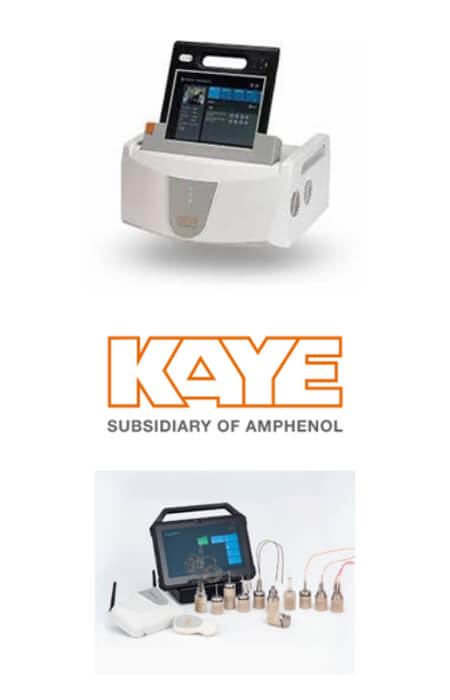
We are an Exclusive Partner of Amphenol Kaye - USA.

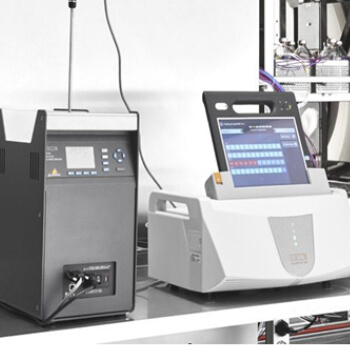
GAMP Group has Kaye Validators (10 AVS & 3 ValProbe Wireless System )for Advanced Thermal validation as well as temperature dry bath for Pre and Post calibration.

Our Validation team is well-versed in EN 285 guidelines and will collaborate with your team to determine the best approach for sterility assurance.

We offer Thermal Validation with Thermal Cycle Development, Steam Quality Test & Thermal Equipment and Qualification Documentation.

We use meticulously tested and calibrated equipment to guarantee precise results.
thermal validation
  • Kaye Validator AVS
  • Thermocouples
  • Wireless dataloggers
  • Baths and standards
  • Biological indicators
  • Flanges
  • Validation clamps
  • Gaskets

We arrive at your project equipped with the right tools, such as smart gaskets with sanitary fittings, feed-through mechanisms, and application-specific thermocouples (Teflon or Kapton). We also ensure the correct dry-block is selected before initiating your autoclave or sterilizer validation.

Autoclave & Sterilization Validation:

Steam Sterilization has been used for more than a century in the pharmaceutical and biotech industry to effectively sterilize products and materials withstanding moisture and higher temperatures.

Critical parameters such as Time, Temperature, Pressure, Direct Steam Contact, Air Removal have an impact on the sterilization results. Achieving Saturated Steam conditions is key and allows a proper temperature and pressure-controlled process.

Depending on the product and packaging characteristics different sterilization temperatures are utilized during Steam Sterilization Validation.

Autoclave Validation / Steam Sterilization Validation is one of the most critical and widely studied processes for the sterilization of drug products, liquids in sealed containers, and hard goods used in the testing or manufacturing of Pharmaceutical, Biotech, and Medical Device products.

The purpose of the Autoclave Validation / Steam Sterilization Validation process is to ensure the destruction of all bacteria, viruses, and other viable microorganisms. The destruction of a microbial population subjected to a sterilization process follows a logarithmic progression based on the Thermal Death Curve.

In the pharmaceutical industry, in order to define a unit as sterile, one must be able to certify that less than one unit in a million is exposed to the risk of not being sterile. The probability of finding a nonsterile unit (Probability of Non-Sterile Unit, or Sterility Assurance Level SAL) must therefore be smaller (as mathematical value) than 10−6.

The critical parameters that affect a successful Autoclave Validation / Steam Sterilization Validation are:

  • Temperature
  • Pressure
  • Time
  • Saturated Steam
  • Air Removal
  • Steam Penetration
  • Drying

Regulatory requirements worldwide require the validation of all GMP Autoclaves and Steam Sterilization processes to provide documented evidence that the sterilization process, developed in process design, can reliably and repeatedly deliver the prescribed sterilization process as well as the attainment of the required Sterility Assurance Level SAL of the products.

Autoclave / Steam Sterilizer Validation can be divided into two main phases: Process Design and Process Qualification.

Process Design is the most critical part of Autoclave Validation / Steam Sterilization Validation as it directly impacts the ability of the sterilization process to repeatably deliver the desired results and quality attributes. Process Design needs to consider many variables such as:
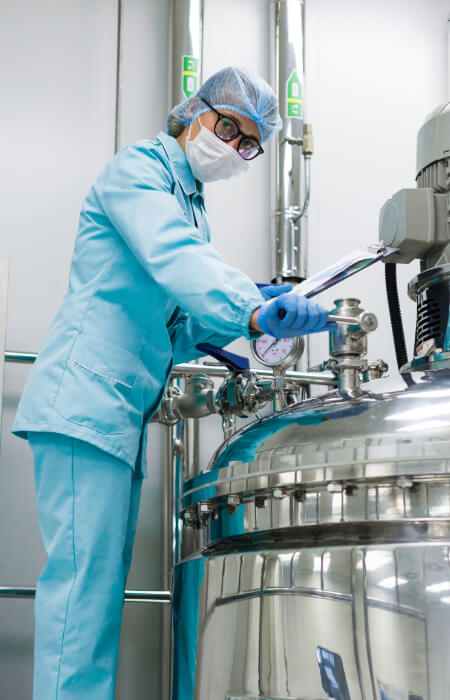
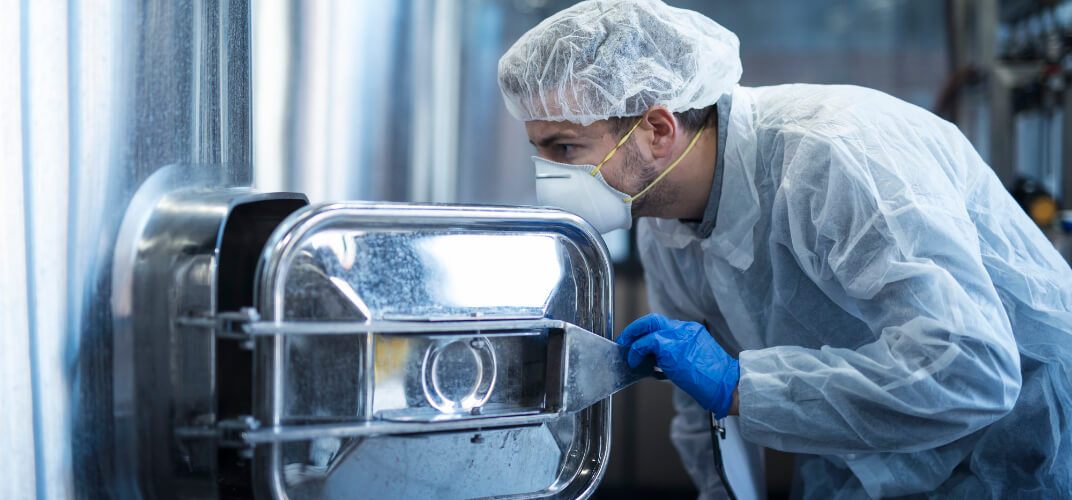
  • Product Types (Porous/Hard Goods, Liquids, Finished Filled Parenterals)
  • Heat sensitivity of Products (Bioburden / Overkill)
  • Packaging
  • Load Configuration
autoclave sterilization validation

Steam-In-Place (SIP) Validation

steam in place validation
  • Steam-in-Place (SIP) sterilization is a critical process in the pharmaceutical industry to ensure the sterility of fixed installations such as tanks, pipelines, and bioreactors in aseptic manufacturing. This process uses saturated steam to kill microorganisms and contaminants without requiring the disassembly of the equipment. The same standards and regulations as those applied in steam autoclaves/sterilizers are used here. Applicable norms for moist heat sterilization, such as EN 285 or ISO 17665, are considered.
  • As a precursor to the SIP process, that is, the sterilization of the equipment, the CIP process (Cleaning-In-Place) is typically performed. Cleaning-in-Place (CIP) describes the on-site cleaning of industrial equipment without disassembling individual components or the entire system. This process cleans complete production facilities, including valves, pumps, pipes, sight glasses, and sensors, through multi-stage cleaning systems and various rinsing cycles with different cleaning solutions. CIP enables an economical and time-efficient cleaning process. While CIP focuses on the removal of product residues and contaminants, it also serves as a necessary precursor to Steam-in-Place (SIP) sterilization. After thorough CIP cleaning, SIP sterilization takes place to kill the remaining microorganisms and ensure the sterility of the equipment. Since SIP guarantees sterility, CIP sets the stage by removing all visible and invisible residues. Together, these processes ensure an aseptic manufacturing environment in accordance with the stringent requirements of pharmaceutical production.
  • The SIP process itself consists of several phases and must be adapted to the specific equipment. Common procedural patterns include preheating, steam sterilization, and cooling. During the preheating phase, the system is flushed with steam to achieve uniform heating. In the steam sterilization phase, saturated steam is introduced at 121.1°C/ 250°F and a defined pressure over a specified period. This critical step ensures the complete sterilization of the equipment.
  • Essential to the SIP sterilization process is the continuous monitoring of parameters such as temperature and pressure both during operation and during the annual qualification and validation. This ensures the compliant operation of the equipment according to standards.
  • After the steam sterilization phase, the system is often cooled by introducing, for example, nitrogen. This process minimizes thermal stress on the materials and prevents potential damage.
  • Procedures such as Cleaning-In-Place (CIP) and SIP require substantial validation effort, especially for fixed installations. Validation requirements must be considered as early as the system design phase (Design Qualification, DQ) through appropriate validation ports to avoid complications during GxP-compliant commissioning (Installation Qualification, IQ / Operational Qualification, OQ / Performance Qualification, PQ).

LYOPHILIZER-Freeze-Drying in the Pharmaceutical and Biotech Industry

Freeze-drying, also known as lyophilization, is a significant manufacturing process in the pharmaceutical and biotechnology sectors. This procedure is primarily applied to liquid products, transforming them into a stable, solid powder through sublimation. The process offers numerous benefits, notably extended shelf life and enhanced stability of the final product, significantly easing subsequent handling and storage.

Talk to our team

Talk to us about your next validation or monitoring project.

Contact Us LinkedIn

Our Business

  • Services
  • Manufacturing
  • Distribution
  • Industries

Services

  • Thermal Validation
  • Commissioning, Qualification & Validation
  • Clean Room Validation
  • Computer System Validation & Data Integrity
  • Bio-Decontamination

Company

  • About Us
  • Investor Relations
  • News
  • Knowledge Centre
  • Contact Us
copyrightGAMP Services Limited 2026. All Rights Reserved.